
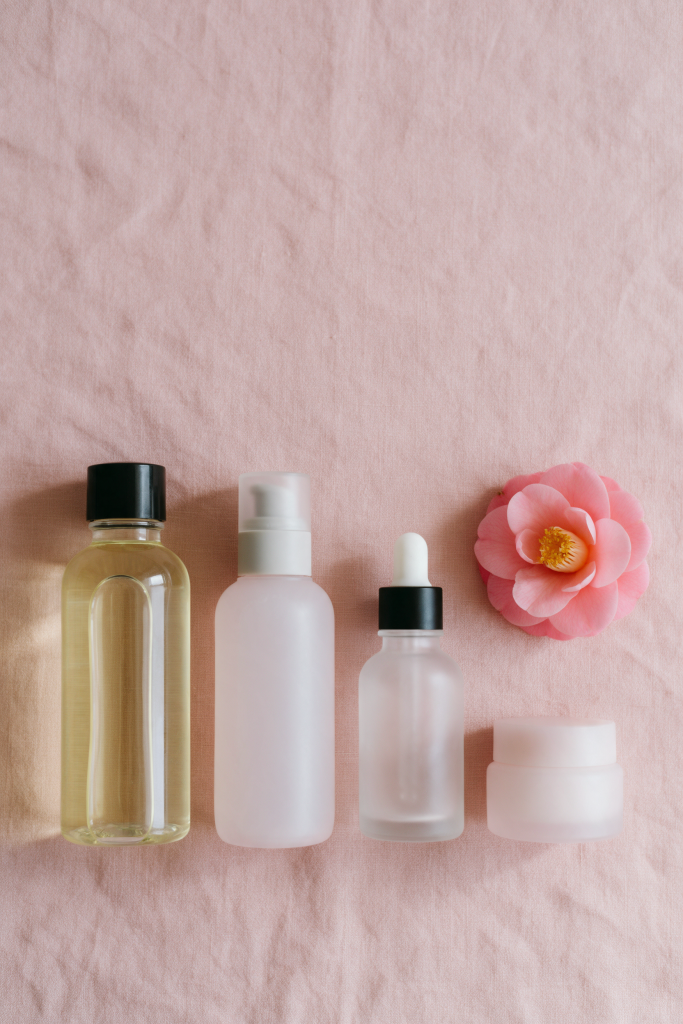
The Korean skincare routine has a reputation for being long, complicated and expensive. In practice, the idea behind it is simple: use gentle products, layer hydration, and protect your skin from the sun every day. You do not need ten steps or a shelf full of products to benefit. This guide explains the classic routine, then shows how to build a simple version you can actually keep up.
Quick answer: A Korean skincare routine layers gentle, hydrating steps: double cleanse at night, then toner, essence, a targeted serum, moisturizer and, in the morning, sunscreen. The classic version has up to 10 steps, but a beginner-friendly routine needs only 4 or 5: cleanser, toner or essence, one serum, moisturizer, and SPF by day. Add new products one at a time and patch test first.
What Is a Korean Skincare Routine?
A Korean skincare routine is less a fixed formula than a philosophy. It focuses on prevention rather than correction, which means cleansing thoroughly but gently, keeping skin hydrated with several thin layers instead of one thick one, and wearing sunscreen daily. Textures tend to be light, such as essences, toners and gels, and the steps are layered from thinnest to thickest.
The Classic 10-Step Korean Routine
The famous 10-step version looks like this. You will not need every step, and several are only used once or twice a week.
- Oil cleanser to dissolve sunscreen, makeup and sebum.
- Water-based cleanser to wash away the rest. Together, steps one and two are called double cleansing.
- Exfoliator, used once or twice a week rather than daily.
- Toner to rebalance and prep skin for what follows.
- Essence, a lightweight, hydrating liquid that sits between toner and serum.
- Serum or ampoule for a specific concern, such as dullness or dark spots.
- Sheet mask, typically once or twice a week.
- Eye cream for the delicate eye area.
- Moisturizer to seal in hydration.
- Sunscreen as the final morning step. At night, some people swap it for a sleeping pack.
A Simple Korean Routine for Beginners
If the classic routine sounds like too much, start here. These four or five steps cover what matters most.
Morning
- Gentle cleanser. Many people with dry or sensitive skin simply rinse with water or use a mild cleanser in the morning.
- Toner or essence. Pat on a hydrating layer.
- Serum (optional). One targeted product, such as niacinamide or vitamin C.
- Moisturizer.
- Sunscreen. The most important morning step. See our picks for the best Korean sunscreens.
Evening
- Oil or balm cleanser, especially if you wore sunscreen or makeup, followed by a gentle water-based cleanser.
- Toner or essence.
- Serum or treatment. This is where an active like salicylic acid or a retinoid can go, if your skin is ready for it.
- Moisturizer.
For more on the order of steps, see our skincare routine order guide and the full morning and night routines.
Choosing Products by Skin Type
- Dry skin: look for hydrating toners and essences with hyaluronic acid, plus a richer cream with ceramides.
- Oily skin: choose a lightweight gel moisturizer and a watery sunscreen. Our oily skin routine has more detail.
- Sensitive skin: keep it minimal, avoid strong fragrance and introduce one product at a time. See our sensitive skin routine. Soothing ingredients such as centella (cica) are popular in Korean formulas.
- Combination skin: a light toner and moisturizer usually work, with a targeted treatment on the oilier areas.
Korean Skincare Ingredients Worth Knowing
You will see the same ingredients again and again on Korean product labels. Centella asiatica (also called cica) is used for its soothing reputation. Snail mucin is a hydrating ingredient popular in essences, and we cover one in our COSRX snail mucin review. Rice and green tea extracts appear in many gentle, brightening-style formulas. Hyaluronic acid and niacinamide are everyday workhorses for hydration and tone. None of these are required, and the evidence for some of the botanical extracts is thinner than for the basics, so judge a product by how it makes your skin feel over time rather than by its ingredient buzzwords.
Do You Really Need to Double Cleanse?
Double cleansing makes the most sense when you wear sunscreen every day, which you should, or makeup, because oil-based cleansers are good at breaking down these products. If you wear neither and have dry or sensitive skin, a single gentle cleanser may be enough. Pay attention to how your skin feels. If it is tight, red or stinging after cleansing, you are probably overdoing it.
How Often Should You Exfoliate?
Start with once a week and see how your skin responds. Chemical exfoliants such as AHAs and BHAs are popular in Korean routines, but over-exfoliating is one of the fastest ways to damage your skin barrier. Do not exfoliate on the same night as a strong retinoid, and stop if you notice burning, peeling or persistent redness. Our guide to the best chemical exfoliants explains the options.
How to Start Without Overwhelming Your Skin
- Begin with the basics: cleanser, moisturizer and sunscreen.
- Add one product at a time, waiting one to two weeks before adding another.
- Patch test each new product on your inner arm or jawline.
- Layer thin to thick, and give each layer a moment to absorb.
- Be consistent. Most routines need 8 to 12 weeks before you can fairly judge results.
If you prefer fewer steps, our minimalist routine shows how little you can get away with.
Common Mistakes
- Skipping sunscreen. Without it, other steps cannot do much for long-term skin health.
- Adding too many new products at once, which makes it impossible to find the source of a reaction.
- Using several strong actives together, such as exfoliating acids with retinol.
- Chasing trends. A cheap, simple routine you will actually follow beats an elaborate one you drop after two weeks.
Korean Skincare Routine FAQ
Do I need all 10 steps?
No. The 10 steps are a menu, not a requirement. Most people do well with four or five.
What order do Korean skincare products go in?
Generally from thinnest to thickest: cleanser, toner, essence, serum, moisturizer, then sunscreen in the morning.
Is Korean skincare good for sensitive skin?
Many Korean formulas are gentle and hydrating, but sensitive skin can still react to individual ingredients. Introduce products slowly and patch test.
How long until I see results?
Hydration benefits can show up quickly, but changes in tone and texture usually take two to three months of consistent use.
The Bottom Line
You do not need a 10-step ritual to get the benefits of Korean skincare. Cleanse gently, layer hydration, use one targeted serum, moisturize and protect your skin with sunscreen every morning. Build slowly, and keep what works. If you want a sunscreen to start with, our Beauty of Joseon Relief Sun review is a good place to begin.
This article is for general information only and is not medical advice. If you have a skin condition such as acne, rosacea or eczema, or if a product causes a reaction, talk to your doctor or dermatologist.