
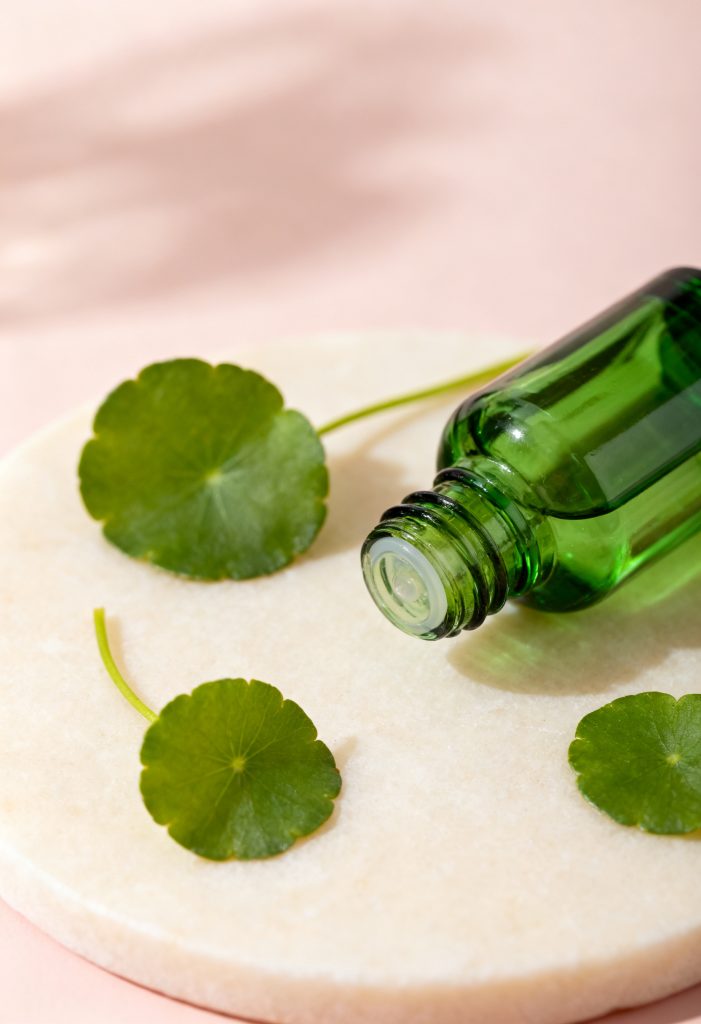
If your skin flares up at the mention of a new active, centella asiatica — usually labeled “cica” — is one of the few ingredients that almost never makes things worse. It has become a staple in Korean skincare for exactly that reason.
What Is Centella Asiatica?
Centella asiatica is a plant extract that has been used in traditional medicine for wound healing for centuries. Modern formulations extract its active compounds — madecassoside, asiaticoside, and asiatic acid — which are what give cica products their calming and repairing effects.
What Does It Actually Do?
- Calms redness and irritation — has anti-inflammatory properties that soothe reactive skin
- Supports barrier repair — encourages the skin to rebuild its protective outer layer
- Speeds up healing — traditionally used on wounds, and shows similar benefit for irritated or compromised skin
- Antioxidant support — helps protect against everyday environmental stress
Who Benefits Most
Cica is particularly useful for skin that is currently reacting — post-procedure, post-sunburn, or mid-purge from a new active like retinol or an acid. It is also a smart everyday pick for anyone with a naturally sensitive or easily flushed complexion.
How to Use It
- Cica is gentle enough for both morning and night, and rarely causes irritation on its own
- Look for it in serums, creams, or dedicated “cica balm” formats for more intensive repair
- It pairs well with almost everything, including retinol and exfoliating acids — in fact, using it alongside stronger actives can help offset irritation
Realistic Expectations
Cica will not exfoliate, brighten, or resurface skin the way an acid or retinol does — that is not its job. Its value is in calming and supporting the skin barrier, which makes it a foundational ingredient rather than a dramatic one. Most people notice reduced redness and sensitivity within one to two weeks of consistent use.