
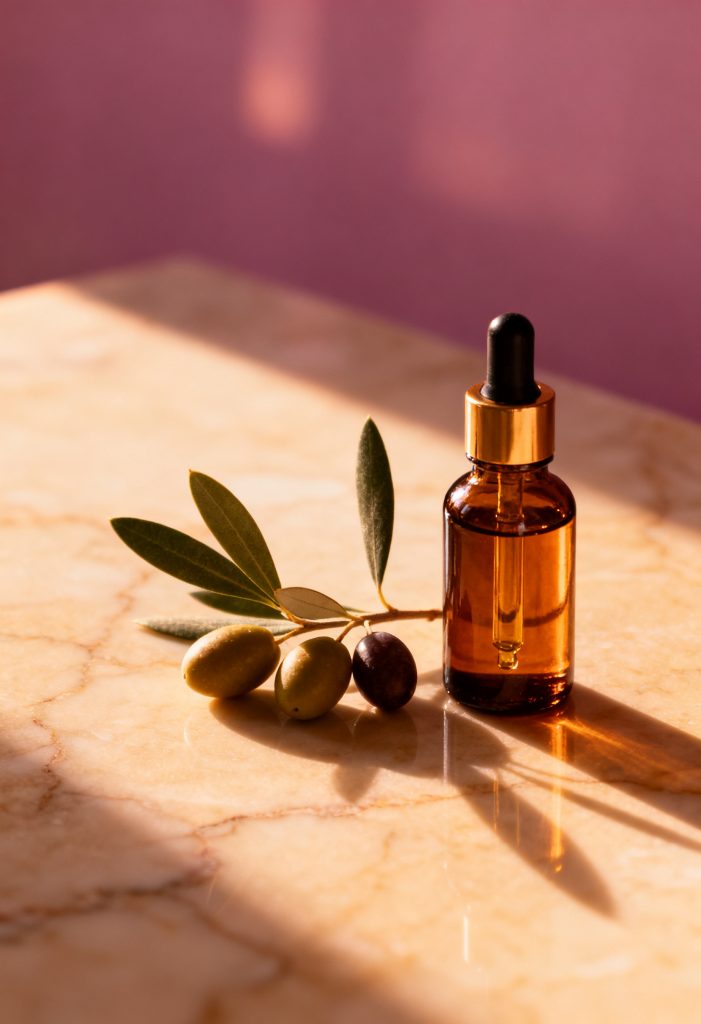
Most facial oils sit on top of skin and feel heavy within minutes. Squalane is the exception — a lightweight oil that closely resembles the sebum your skin already produces, which is why it absorbs so easily.
What Is Squalane?
Squalane (not to be confused with squalene, its less stable precursor) is a saturated, hydrogenated version of an oil naturally found in human sebum, as well as in olives, sugarcane, and rice bran, which is where most skincare formulations now source it. The hydrogenation process makes it far more shelf-stable than squalene, so it will not oxidize or turn rancid the way many plant oils can.
What Does It Actually Do?
- Locks in moisture — works as an emollient and occlusive, sealing hydration into the skin
- Mimics natural sebum — absorbs quickly without the greasy after-feel of heavier oils
- Softens and smooths — improves the look and feel of rough or flaky patches
- Non-comedogenic — unlikely to clog pores, making it suitable even for oilier or acne-prone skin
Who Should Use It
Because it is lightweight and non-comedogenic, squalane works across nearly every skin type — including oily and acne-prone skin, where richer oils are usually avoided. It is especially useful for dry or dehydrated skin that wants oil-level hydration without the heaviness.
How to Use It
- Apply after water-based serums (like hyaluronic acid) to help seal them in
- A few drops go a long way — start with 2 to 3 drops and adjust as needed
- Can be used both morning and night, and layers well under sunscreen or makeup once fully absorbed
- Also useful mixed into foundation for a dewier finish, or applied to dry patches, cuticles, and ends of hair
What to Expect
Squalane is a supporting ingredient rather than a treatment — it will not fade dark spots or smooth fine lines the way an active would. Its job is comfort and hydration, and most people notice softer, less tight-feeling skin within days of adding it in.