
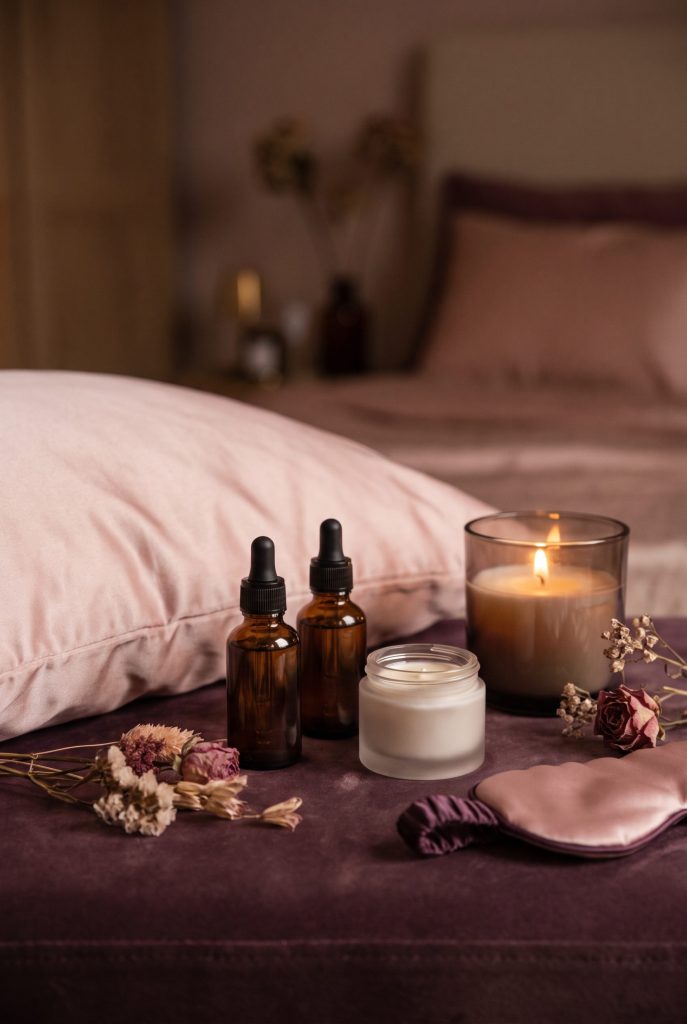
While you sleep, your skin goes into repair mode. Cell turnover increases, collagen synthesis peaks, and your skin is more permeable — absorbing active ingredients more effectively than during the day. A well-built night routine takes full advantage of this window. Here’s how to do it right.
Why Your PM Routine Is Your Most Powerful Tool
At night, you’re not competing with sunscreen or worrying about UV sensitivity. This means you can use the most potent actives — retinol, AHAs, peptides at higher concentrations — without limitation. The skin’s increased nighttime permeability means ingredients penetrate deeper and work harder.
Free: The Peptide Routine Cheat SheetPrint it, stick it on the mirror. AM and PM steps in the right order, plus what layers with what.
Get it freeStep 1: Double Cleanse
If you wore SPF and/or makeup during the day (which you should), a single cleanse isn’t enough. Double cleansing ensures active ingredients reach clean skin, not a layer of sunscreen residue.
- First cleanse: Cleansing balm or micellar water to dissolve SPF, makeup, and pollution
- Second cleanse: Your regular cleanser (gel, cream, or foam depending on skin type) to clean the skin itself
Step 2: Exfoliant (2–3 Nights Per Week)
Not every night — rotate with your other actives. Choose based on your skin concerns:
- AHA (glycolic or lactic acid) for texture, brightness, and hyperpigmentation
- BHA (salicylic acid) for oily skin, pores, and breakouts
On nights you exfoliate, skip retinol. Don’t layer them.
Step 3: Treatment Serum
This is the heart of your anti-aging routine. Alternate between:
- Retinol nights (2–3x/week): Retinol is your most powerful anti-aging active — proven to increase collagen, accelerate cell turnover, and reduce fine lines. Apply a pea-sized amount to dry skin.
- Peptide serum nights (remaining nights): Peptides complement retinol beautifully — they support collagen synthesis, improve firmness, and are gentle enough for nightly use. On nights you use retinol, you can also apply peptides after.
Step 4: Eye Cream
The under-eye area lacks oil glands, making it prone to dehydration and fine lines. An eye cream with peptides, caffeine (to reduce puffiness), or retinol (in a lower-concentration eye-specific formula) adds targeted support. Pat gently with your ring finger.
Step 5: Moisturiser
Night creams are typically richer than daytime moisturisers — this is intentional. Your skin loses water overnight (transepidermal water loss, or TEWL), and a richer cream helps compensate. Look for ceramides, hyaluronic acid, shea butter, and squalane. A good night cream also buffers retinol’s potential dryness.
Step 6: Face Oil or Sleeping Mask (Optional)
A few drops of a facial oil pressed over your moisturiser creates an occlusive seal that locks everything in overnight. Rosehip oil, squalane, and sea buckthorn oil all have antioxidant and restorative properties. Alternatively, a sleeping mask once or twice a week provides intense hydration.
Sample Anti-Aging Night Schedules
Monday / Wednesday / Friday: Double cleanse → Retinol → Peptide moisturiser → Face oil
Tuesday / Thursday: Double cleanse → AHA exfoliant → Hyaluronic acid → Rich night cream
Weekend: Double cleanse → Peptide serum → Eye cream → Sleeping mask
The Most Common PM Routine Mistake
Using too many actives on the same night. Retinol + AHA + vitamin C all in one evening is a recipe for irritation, barrier damage, and skin that looks worse, not better. Fewer, targeted products used consistently outperform a 10-step routine used chaotically.