
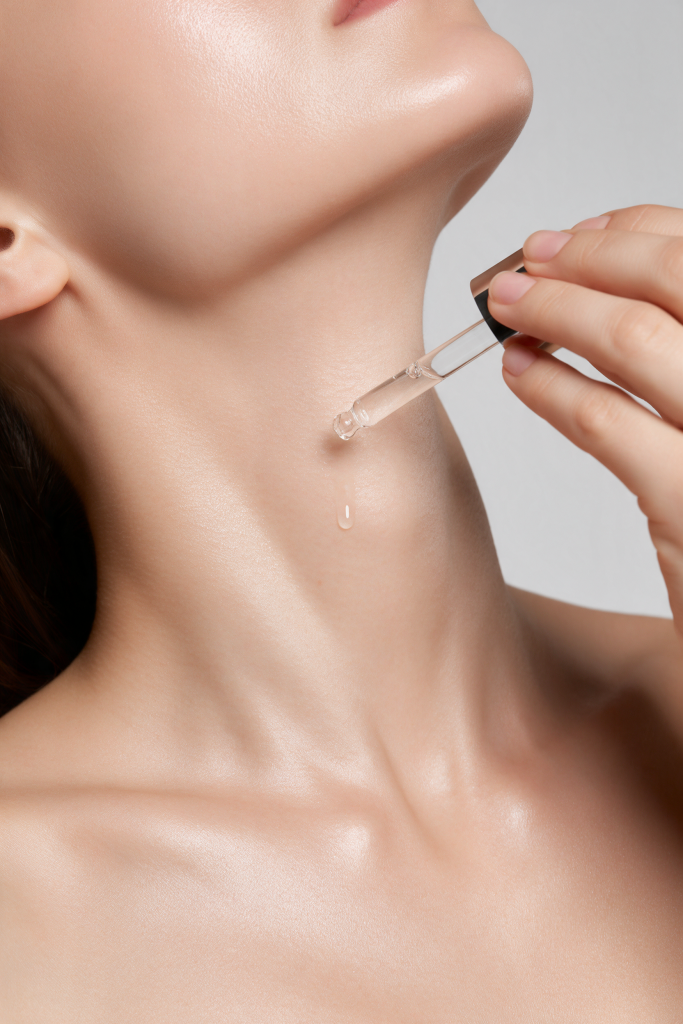
Your face gets most of the attention in a skincare routine, but the neck is often left out until crepey lines and loose-looking skin appear. A peptide serum can be a good addition for both areas, as peptides are commonly used to support the look of firmness and smoothness. The key is knowing how to choose a formula that suits the thinner, more delicate skin on the neck, and how to apply it properly.
This guide explains how a peptide serum for face and neck should differ from a regular serum, what to look for on the label, how to apply it, and how to build it into your routine. For the ingredient basics, read our complete guide to peptides.
Why the Neck Needs Its Own Attention
Neck skin is thinner than facial skin, has fewer oil glands, and moves constantly as you look down at phones and screens. That combination means it can dry out and show lines earlier. It also tends to be more sensitive, so strong acids and high-strength retinoids can irritate it more easily than they do the face. A gentle, well-moisturized approach usually works better.
Free: The Peptide Routine Cheat SheetPrint it, stick it on the mirror. AM and PM steps in the right order, plus what layers with what.
Get it freeWhat to Look for in a Peptide Serum
- Named peptides. Look for ingredients like palmitoyl tripeptide-1 or acetyl hexapeptide-8 on the label. Our guide on skincare products with peptides explains what is worth paying for.
- A hydrating base. Hyaluronic acid, glycerin and panthenol help the skin look plump while the peptides do their job.
- Soothing support. Niacinamide, centella and squalane are gentle ingredients that suit the neck.
- Fragrance-free. The neck is prone to irritation, especially when you also use perfume nearby.
- A pump or dropper. It helps you use a measured amount and keeps the formula cleaner.
Serum vs Cream for the Neck
Serums are lightweight and deliver the active ingredients, but they do not seal in moisture on their own. On the neck it is usually best to apply the serum first, then follow with a richer moisturizer. If you want one product, a peptide cream can be easier. See the best peptide moisturizers for options, or the best peptide serums for serums.
How to Apply a Peptide Serum to Face and Neck
- Cleanse and pat dry. Slightly damp skin helps the serum spread.
- Use two to three drops or a small pump for the face, and the same amount again for the neck.
- Smooth the face in upward strokes, then apply the neck with gentle upward strokes from the collarbone to the jaw.
- Allow it to absorb for a minute, then add a moisturizer to both areas.
- In the morning, finish with sunscreen on the face and the neck. The front and sides of the neck need protection too.
Where Peptides Fit in Your Routine
Peptides can be used morning, night or both. Many people use them in the evening alongside a moisturizer, and keep vitamin C for the morning. If you are using a retinoid at night, try peptides on the nights between, or in the morning. Our skincare routine order guide shows where each product sits, and the beginner peptide routine gives a ready-made plan.
What to Expect and How Long It Takes
Immediate effects tend to be hydration and a smoother feel. Changes to the look of fine lines and firmness are subtle and slow, so allow eight to twelve weeks of regular use. Photos taken in the same light every few weeks are a better guide than the mirror. Expectations should stay realistic: no serum will tighten loose skin the way a procedure can, and the neck responds best to a combination of sun protection, moisturizing and consistency.
Protect the Neck From the Sun
Sun exposure is a major driver of lines and uneven tone on the neck and chest. Apply sunscreen down to the collarbone every morning. Our sunscreen guide explains how to choose one you will actually use.
Who Should Be Careful
- People with very sensitive or reactive skin should patch test first on the inner arm.
- Anyone using prescription retinoids should introduce new products slowly and ask their dermatologist.
- If you develop redness, itching or swelling, stop using the product.
Common Mistakes With Neck Care
- Stopping the routine at the jawline, so the neck gets no sunscreen or moisturizer.
- Using strong exfoliating acids on the neck every night, which can cause irritation and redness.
- Pulling the skin downward when applying products. Always use gentle upward strokes.
- Expecting dramatic tightening from a serum alone. Consistent protection and moisturizing do more than any single product.
Pairing With Other Ingredients
Peptides are generally easy to combine. Vitamin C in the morning and peptides at night is a simple split, and niacinamide pairs well with peptides too. If you use retinol, you can apply it on separate nights, as covered in our guide to peptides vs retinol.
Choosing a Texture for Your Skin Type
If your skin is oily or combination, look for a watery or gel-like serum that absorbs quickly and does not leave a tacky film. If your skin is dry or mature, a slightly richer serum or an essence-style formula, followed by a cream, tends to feel more comfortable on the neck. Whatever you choose, start with a small amount and increase only if your skin feels comfortable.
The Bottom Line
A fragrance-free peptide serum with a hydrating base can be a gentle way to look after both your face and your neck. Use a small amount on each, follow with a moisturizer, protect the area with sunscreen, and give it a couple of months before deciding if it works for you.
Peptide Serum for Face and Neck FAQ
Can I use the same peptide serum on my face and neck?
In most cases yes, as long as it is gentle and fragrance-free. If your neck is more sensitive, use less and build up.
Do I need a separate neck cream?
Not necessarily. A good moisturizer with peptides or ceramides can cover both areas.
How long does it take to see results?
Hydration is quick, but visible changes in fine lines and firmness take about eight to twelve weeks.
Can I use peptides every day?
Yes, for most people. If your skin gets irritated, reduce to alternate days.
Should I use peptides morning or night?
Either works. Choose the time that fits your routine best and stay consistent.
This article is for general information and is not medical advice. Product formulas change from time to time, so always check the current ingredient list before buying, and talk to a doctor or dermatologist about persistent skin concerns.