
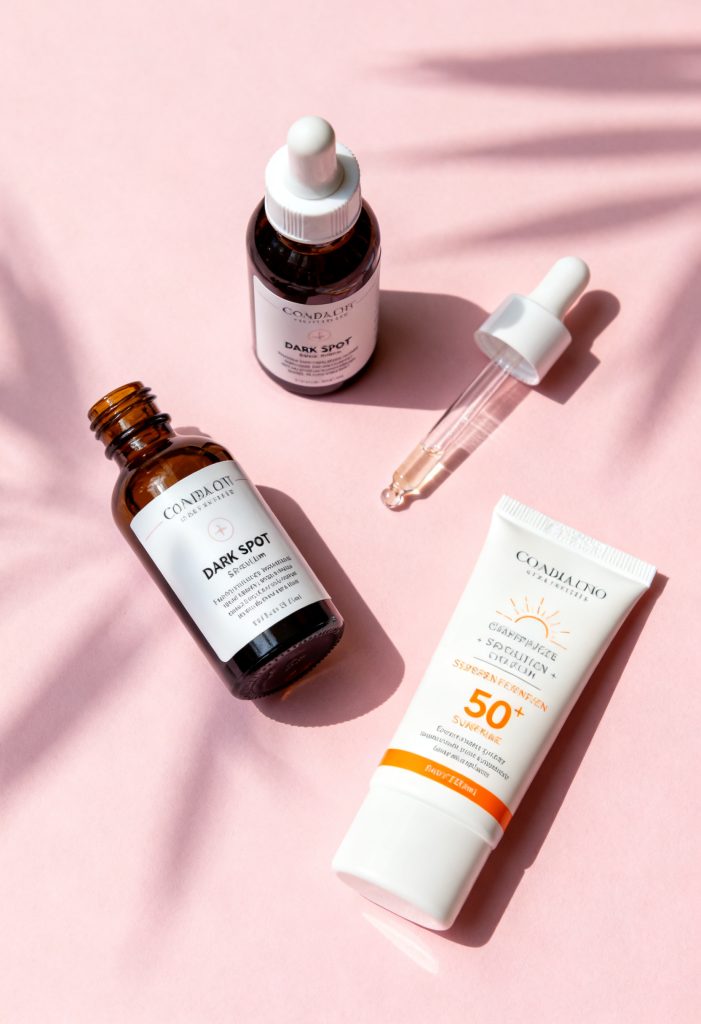
Hyperpigmentation is one of the slowest skin concerns to treat, and also one of the most oversold — plenty of products promise fast fading that the biology simply doesn’t support. Here’s a routine built around ingredients with real evidence behind them, and realistic expectations about timeline.
Understanding Hyperpigmentation
Dark spots form when melanocytes overproduce pigment in response to inflammation, sun exposure, or hormonal changes — most commonly after acne, injury, or sun damage. Because pigment sits at different depths in the skin, some spots fade in weeks while others take many months, regardless of what’s applied.
Morning Routine
- Gentle cleanser — nothing stripping; hyperpigmentation-prone skin is often already inflamed and doesn’t need extra irritation. CeraVe Foaming Facial Cleanser is a reliable, low-irritation option.
- Vitamin C serum — a well-formulated, stable vitamin C serum is one of the better-evidenced brightening actives, and it pairs a real antioxidant benefit with pigment support.
- Niacinamide — inhibits the transfer of pigment to skin cells, making it a strong complement to vitamin C rather than a substitute.
- Broad-spectrum SPF 30+, reapplied — this is the single most important step. Unprotected sun exposure actively feeds hyperpigmentation and undoes progress from every other product in the routine.
Evening Routine
- Double cleanse if wearing SPF or makeup — residue left on the skin can prolong inflammation in already-sensitized areas.
- Azelaic acid or tranexamic acid (alternate nights) — both are well-evidenced for fading dark spots with a lower irritation profile than stronger acids.
- Retinol (2-3x per week, building up) — increases cell turnover, which helps surface pigmented cells faster, but needs to be introduced slowly to avoid triggering more inflammation.
- Rich moisturizer with ceramides — a compromised barrier is more prone to inflammation, and inflammation is what creates new dark spots in the first place.
Key Ingredients That Actually Help
- Vitamin C — antioxidant support plus mild pigment-inhibiting action
- Niacinamide — blocks pigment transfer to skin cells
- Azelaic acid — gentle, well-tolerated, effective on post-acne marks specifically
- Tranexamic acid — increasingly well-studied for stubborn, hormonally-linked pigmentation
- Retinol — speeds cell turnover, supporting long-term fading
- SPF — not a treatment, but a non-negotiable without which everything else underperforms
The Mistake That Undoes Everything
Skipping or under-applying sunscreen is the single biggest reason hyperpigmentation routines fail. UV exposure re-triggers the exact melanocyte response the rest of the routine is trying to calm — treating dark spots without consistent SPF is working against yourself.
Realistic Timeline
Surface-level, recent post-acne marks can visibly improve within 6-8 weeks. Deeper, longer-standing pigmentation (especially melasma) often takes 4-6 months of consistent use, sometimes longer, and can require patience through what feels like a plateau before visible change.