
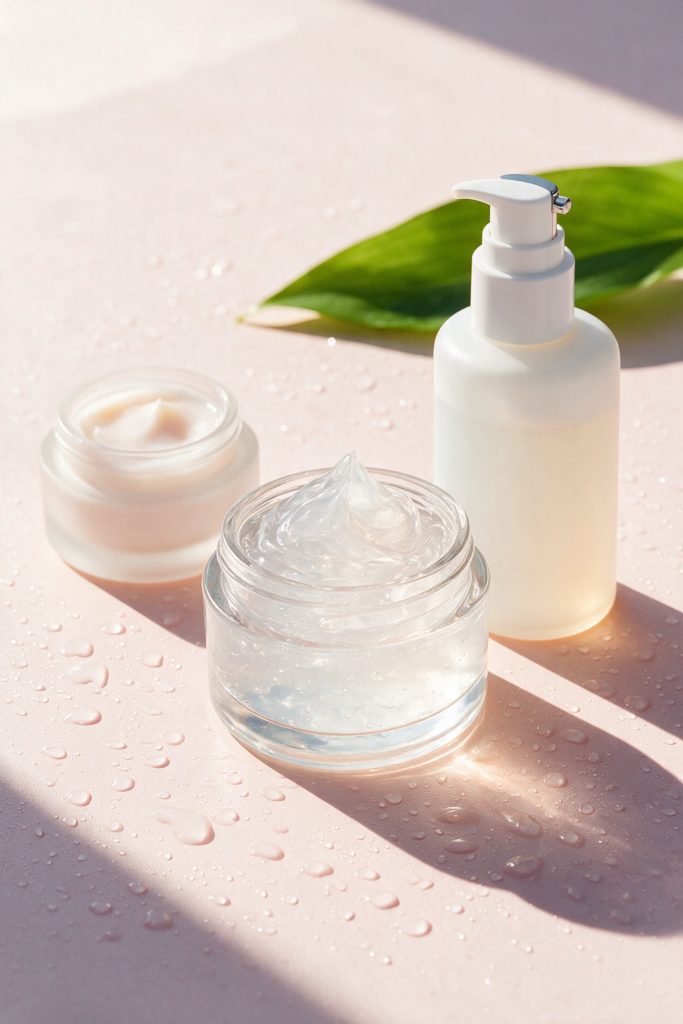
If your skin is shiny by lunchtime, it’s tempting to skip moisturiser altogether. But oily skin still needs hydration. When it’s dehydrated, it can feel tight and irritated, and harsh oil-control routines often leave skin both greasy and dry at the same time. The right moisturiser hydrates without heaviness, supports your skin barrier, and can even help keep shine in check.
Here’s what to look for, and the moisturisers worth trying for oily skin.
What Makes a Good Moisturiser for Oily Skin
Textures that suit oily skin
- Gel and gel-cream formulas. Water-based and quick to absorb, these give hydration with almost no residue.
- Lightweight lotions. A good middle ground if gels feel too thin, especially in cooler months.
- Oil-free or “non-comedogenic” formulas. Not a guarantee, but a helpful sign the product was designed not to clog pores.
Ingredients to look for
- Hyaluronic acid and glycerin: humectants that draw water into the skin without adding oil. See our hyaluronic acid guide.
- Niacinamide: helps regulate oil and can make pores look smaller over time. More in our niacinamide guide.
- Ceramides: support the skin barrier, which matters if you use acne treatments. See our ceramides guide.
- Squalane: a lightweight oil that closely mimics skin’s own sebum and rarely clogs pores. Read more in our squalane guide.
- Zinc: sometimes added to help with shine and calm breakouts.
Ingredients to be careful with
- Heavy butters and rich oils such as shea butter and coconut oil, which can feel greasy and may clog pores for some people.
- High levels of drying alcohol near the top of the ingredient list. It gives an instant matte feel but can leave skin irritated.
- Strong fragrance, especially if you’re also using retinoids or exfoliants.
The Best Moisturisers for Oily Skin
1. Best overall gel: Neutrogena Hydro Boost Water Gel
A water-light gel built around hyaluronic acid. It sinks in almost instantly, leaves no greasy film and layers well under sunscreen and makeup. The original version contains fragrance, so sensitive skin may prefer a fragrance-free variant. Read our full Neutrogena Hydro Boost review.
Best for: oily and combination skin that wants hydration with a clean finish.
2. Best for acne-prone oily skin: CeraVe PM Facial Moisturizing Lotion
An oil-free lotion with niacinamide, ceramides and hyaluronic acid. It’s light enough for oily skin but supportive enough to use alongside retinoids and acne treatments. Despite the “PM” in the name, it works well in the morning under sunscreen too.
Best for: oily, acne-prone skin using active treatments.
3. Best for sensitive oily skin: La Roche-Posay Toleriane Double Repair Face Moisturizer
A lightweight, fragrance-free cream with niacinamide and ceramides. It has a slightly richer feel than a gel, which makes it a good choice if your skin is oily but easily irritated, or if acne treatments are drying you out. See our Toleriane Double Repair review.
Best for: oily skin that reacts to fragrance or active ingredients.
4. Best oil-control gel: Clinique Dramatically Different Oil-Control Gel
An oil-free gel designed specifically for oily skin. It absorbs quickly and leaves a soft matte finish, which suits people who dislike any sense of product on their skin.
Best for: very oily skin in hot, humid weather.
5. Best gel-cream: Belif The True Cream Aqua Bomb
A bouncy gel-cream with a cooling, refreshing feel. It gives more cushion than a pure gel while staying lightweight. It does contain fragrance, so patch test first if your skin is sensitive.
Best for: combination skin that’s oily in the T-zone and normal elsewhere.
6. Best for daytime: EltaMD UV Clear Broad-Spectrum SPF 46
Not a moisturiser in the strict sense, but many people with oily skin use this lightweight sunscreen as their morning moisturising step. It contains niacinamide and hyaluronic acid and is popular with acne-prone skin. Read our EltaMD UV Clear review.
Best for: keeping your morning routine to as few layers as possible.
How We Chose These Moisturisers
We focused on formulas that are widely available, have a long track record with oily and acne-prone skin, and rely on well-understood ingredients rather than marketing claims. Each pick is either oil-free or uses lightweight ingredients unlikely to clog pores, and together they cover different needs: pure hydration, acne support, sensitive skin, oil control and daytime protection.
Quick Comparison
- Lightest feel: Neutrogena Hydro Boost Water Gel or Clinique Oil-Control Gel
- Best alongside acne treatments: CeraVe PM Facial Moisturizing Lotion
- Fragrance-free and gentle: La Roche-Posay Toleriane Double Repair
- Most cushion without heaviness: Belif Aqua Bomb
- Fewest morning steps: EltaMD UV Clear
If you’re still unsure, start with a simple fragrance-free gel or lotion. It’s the lowest-risk option for oily skin, and you can always switch to something with more oil control or cushion once you know how your skin responds.
How to Use Moisturiser on Oily Skin
- Use less than you think. A pea- to almond-sized amount is enough for your whole face.
- Apply to slightly damp skin. This helps humectants like hyaluronic acid lock in more water.
- Focus where you need it. Combination skin can take a little less on the T-zone and a little more on drier cheeks.
- Always follow with sunscreen in the morning. Oily skin still needs daily SPF. Our sunscreen guide covers lightweight options.
- Get the layering right. Serums before moisturiser, sunscreen after. Our skincare routine order guide explains the full sequence.
Switching Moisturisers With the Seasons
Oily skin often changes through the year. In hot, humid months, a pure gel may be all you need, and some people with very oily skin find a lightweight gel sunscreen is enough in the morning. In cooler, drier months, or in air-conditioned offices, the same skin can feel tight, and a lotion or gel-cream becomes more comfortable. It’s fine to keep two moisturisers and switch between them as your skin tells you.
Signs Your Oily Skin Is Actually Dehydrated
Oily and dehydrated can happen together. Oil is about sebum, while hydration is about water. If your skin is shiny but also feels tight after cleansing, looks dull, or shows fine, crepey lines that disappear when you moisturise, it’s probably lacking water. A hydrating gel moisturiser and a gentler cleanser often improve both shine and comfort. For a full routine, see our skincare routine for oily skin.
Best Moisturiser for Oily Skin: FAQ
Does oily skin need moisturiser?
Yes. Skipping moisturiser can leave skin dehydrated and irritated, especially if you use cleansers or treatments that dry the skin. A lightweight, oil-free formula gives hydration without extra shine.
Is a gel or cream better for oily skin?
Gels and gel-creams usually feel best on oily skin because they’re water-based and absorb quickly. Lightweight lotions work well too. Rich creams are better saved for very dry patches or cold weather.
Can moisturiser make oily skin worse?
A heavy or pore-clogging formula can. A lightweight, non-comedogenic moisturiser shouldn’t, and it may even help balance oiliness over time.
Should I use moisturiser if I have acne?
Yes, especially if you use acne treatments like salicylic acid, benzoyl peroxide or retinoids. They can dry the skin, and a good moisturiser helps you tolerate them. See our skincare routine for acne-prone skin.
What ingredients should oily skin avoid in a moisturiser?
Heavy butters and rich oils, high levels of drying alcohol, and strong fragrance if your skin is sensitive. Everyone’s skin is different, so patch test anything new.
Product formulas change from time to time. Always check the current ingredient list before buying.