
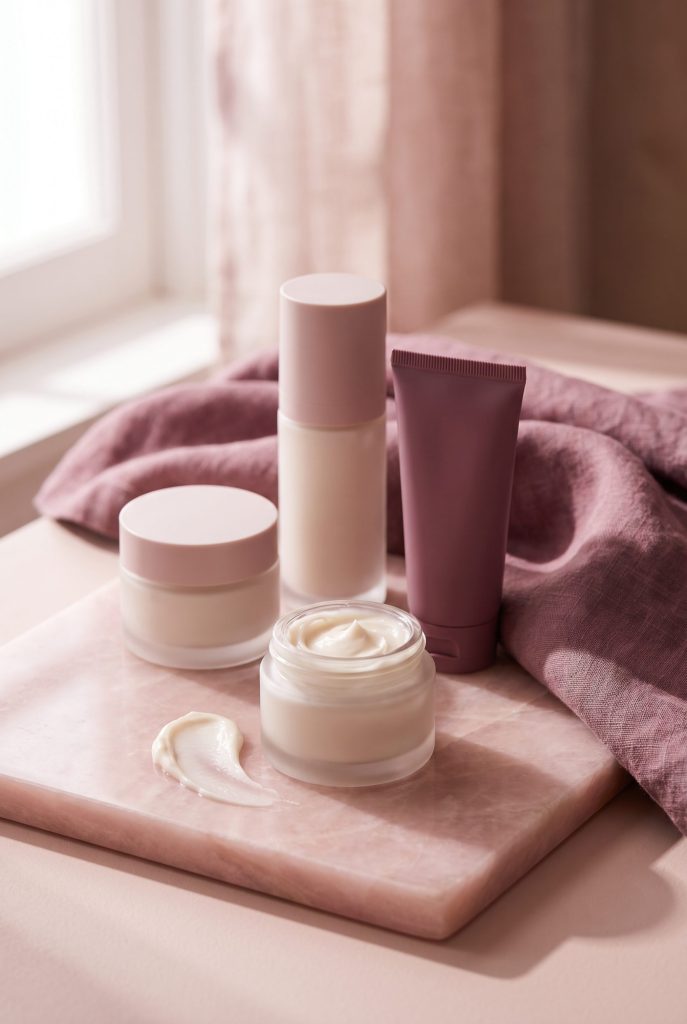
An over-exfoliated or reactive skin barrier doesn’t need another active ingredient — it needs ceramides. Here’s how to find a moisturizer that actually supports repair rather than just sitting on the surface.
For Significant Barrier Damage: High-Ceramide Creams
Look for a moisturizer listing multiple ceramide types (such as ceramide NP, AP, and EOP) near the top of the ingredient list. A well-formulated ceramide ratio matters more than a single high percentage of one type, since the skin’s natural barrier relies on a specific balance of lipids.
For Oily or Acne-Prone Skin: Lightweight Ceramide Gels
A gel-cream ceramide formula delivers barrier support without the heaviness that can aggravate oily or acne-prone skin, making it possible to repair the barrier without triggering more congestion.
For Overnight Repair: Ceramide Sleeping Creams
A richer, occlusive ceramide formula worn overnight takes advantage of the skin’s natural repair cycle, making it a good addition when the barrier needs more intensive, sustained support.
What to Check on Any Ceramide Moisturizer
- Fragrance-free formulation — a compromised barrier is more reactive to fragrance, even from natural sources
- Supporting lipids — cholesterol and fatty acids alongside ceramides more closely mimic the skin’s natural composition
- A short, simple ingredient list — fewer potential irritants while the barrier is healing
How to Use a Ceramide Moisturizer
Apply generously, morning and night, and pause other actives — retinol, exfoliating acids, vitamin C — until the barrier feels visibly calmer. Signs of a damaged barrier include persistent tightness, stinging with normally-tolerated products, and visible flaking or redness.
The Bottom Line
A damaged barrier responds to simplicity and ceramides, not to adding more treatment steps. Strip the routine back to a gentle cleanser, a ceramide moisturizer, and SPF until the skin recovers.