
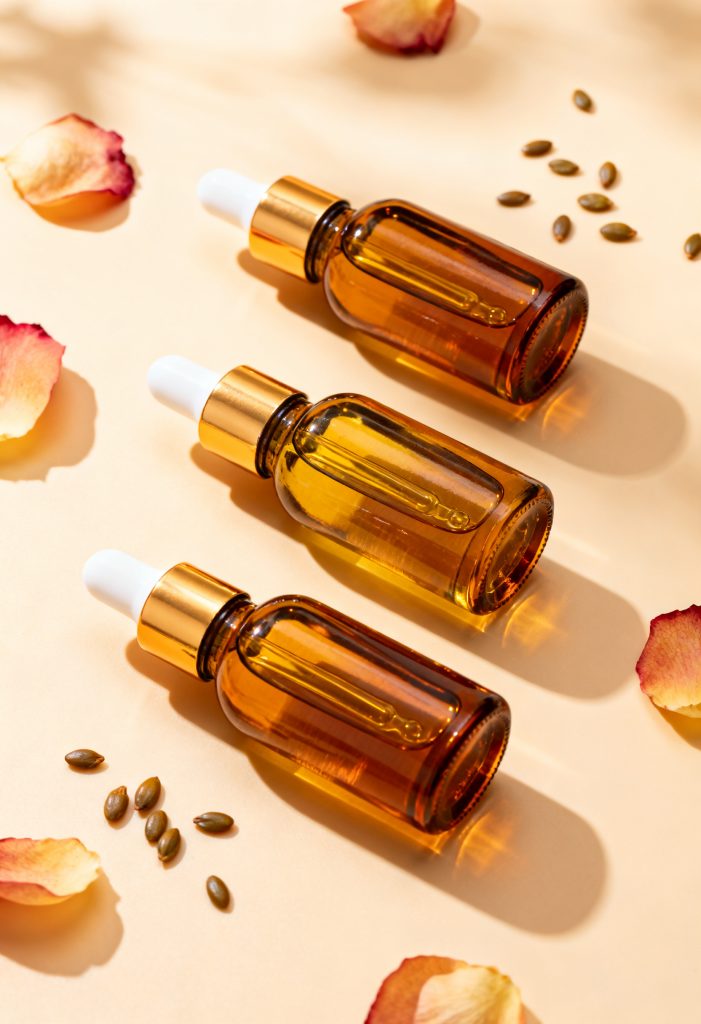
Face oils spent years being unfairly lumped in with “will clog your pores,” but the right oil, used correctly, is one of the most effective ways to lock in moisture for dry or mature skin.
For Deep Nourishment: Marula Oil
Rich in oleic acid and antioxidants, marula oil absorbs faster than its rich feel suggests and is well suited to very dry, tight-feeling skin that needs a genuine moisture boost overnight.
Free: The Peptide Routine Cheat SheetPrint it, stick it on the mirror. AM and PM steps in the right order, plus what layers with what.
Get it freeFor Mature Skin: Rosehip Oil
Naturally containing a small amount of vitamin A along with essential fatty acids, rosehip oil is one of the most researched face oils for supporting texture and tone in mature skin, alongside its moisturizing benefit.
For a Lighter Feel: Squalane Oil
Squalane mimics the skin’s own natural oils, making it one of the least likely to feel heavy or greasy. It’s a good entry point for anyone nervous about trying a face oil for the first time.
For Barrier Support: Sunflower Seed Oil
High in linoleic acid, sunflower seed oil supports the skin barrier particularly well and is a gentler, less comedogenic option than heavier oils like coconut oil.
What to Check on Any Face Oil
- A short, recognizable ingredient list — the best face oils are often single-ingredient or close to it
- Cold-pressed processing — preserves more of the oil’s natural antioxidant content than heat-processed alternatives
- Dark or opaque packaging — protects the oil from light degradation over time
How to Use a Face Oil
Apply as the last step of a nighttime routine, after moisturizer, to seal in everything underneath. A few drops go a long way — more isn’t better, and applying too much is the most common reason people feel oils sit heavy on the skin.
How to Choose a Face Oil for Your Skin Type
- Very dry or mature skin: rosehip, marula or argan oil offer richer nourishment and suit use at night.
- Dry but easily congested skin: squalane and jojoba are lighter and closer to the skin’s own oils, so they are less likely to feel heavy.
- Sensitive skin: choose a single-ingredient oil with no added fragrance or essential oils, and patch test first.
- Combination or acne-prone skin: oils are not off the table, but start with a light option such as squalane and a very small amount. Heavier oils such as coconut oil are more likely to cause trouble on the face.
For mature skin that wants a full routine rather than just an oil, see our mature skin routine.
Face Oil vs Moisturizer: What Is the Difference?
A moisturizer usually combines water, humectants that draw moisture in, and emollients that soften. A face oil is mostly emollient and occlusive, which means it helps slow water loss rather than adding water. That is why oils work best on top of a hydrating serum or moisturizer, rather than as a replacement for hydration. Dry skin often needs both: water-binding ingredients such as hyaluronic acid and ceramides, and an oil to help keep it in.
Other Oils Worth Knowing
- Jojoba oil: technically a liquid wax with a structure similar to the skin’s sebum, which is why many people find it balancing.
- Argan oil: contains oleic and linoleic acids and absorbs fairly well, a popular all-rounder for dry skin.
- Camellia seed oil: a light, fast-absorbing oil that suits those who dislike a greasy finish.
Oils to Be Careful With
Coconut oil is highly occlusive and many people with acne-prone skin find it clogs their pores on the face. Blends that rely on a long list of essential oils can irritate sensitive skin, and citrus oils can make skin more sun-sensitive. A simple, short ingredient list is the safest approach.
Do Face Oils Clog Pores?
It depends on the oil, the amount and your skin. Published comedogenic ratings are a rough guide only, because real-world results vary between people and formulas. If you are acne-prone, patch test on a small area for a week, use two or three drops rather than a palmful, and watch for new bumps along the jaw and chin.
How to Layer a Face Oil
- Cleanse and apply any hydrating serums to slightly damp skin.
- Apply your moisturizer.
- Warm two or three drops between your palms and press, rather than rub, onto the face and neck.
- In the morning, use oil sparingly or skip it, because sunscreen and makeup can pill on top of it. Evening is where an oil works best.
How to Patch Test a Face Oil
Put a drop behind your ear or on your inner forearm once a day for three to four days and watch for redness, itching or bumps. If it is clear, use it on a small part of your face for a week before applying it everywhere. This is especially worth doing if you have reacted to skincare before.
Storage and Shelf Life
Oils can go rancid. Keep them in a cool, dark place with the cap tightly closed, and discard any that smell sharp or paint-like. Most cold-pressed oils are best used within about six to twelve months of opening, so smaller bottles are often a better buy.
The Bottom Line
A well-chosen face oil is a genuine finishing step for dry or mature skin, not a clogging risk. Match the oil to your skin’s specific need — richness, texture support, or lightweight barrier care — and apply it last.
Face Oil FAQ
What is the best face oil for dry mature skin?
Rosehip, marula and squalane are three popular options. Rosehip is often chosen for texture and tone, marula for rich nourishment and squalane for a lighter feel.
Can I use face oil every night?
Yes, if your skin tolerates it. A few drops as the last step of your evening routine is a common approach for dry skin.
Do face oils reduce wrinkles?
They can make skin look plumper and smoother by reducing water loss, so fine lines may look softer. They do not remove wrinkles. Actives such as retinol and peptides are what support the skin over time.
Should I put face oil on before or after moisturizer?
Most routines apply oil after moisturizer, to seal everything in. Some people mix a drop into their moisturizer instead.
Can oily skin use a face oil?
Some oily skin tolerates a light oil in small amounts, but it is not essential. If you are very oily or breakout-prone, a gel moisturizer is usually the simpler choice.
This guide is for general information and is not medical advice. Stop using any product that causes irritation.
Keep Reading
- Ceramides: The Ingredient That Repairs Your Skin Barrier
- Panthenol (Pro-Vitamin B5): The Ingredient Behind Every Great Barrier Cream
- The Best Skincare Routine for Dry Skin
- Best Cleansers for Dry Skin: 5 Gentle, Hydrating Picks
- Squalane: The Lightweight Oil That Mimics Your Skin’s Own Moisture
- Best Night Creams for Mature Skin: 5 Rich, Supportive Picks