
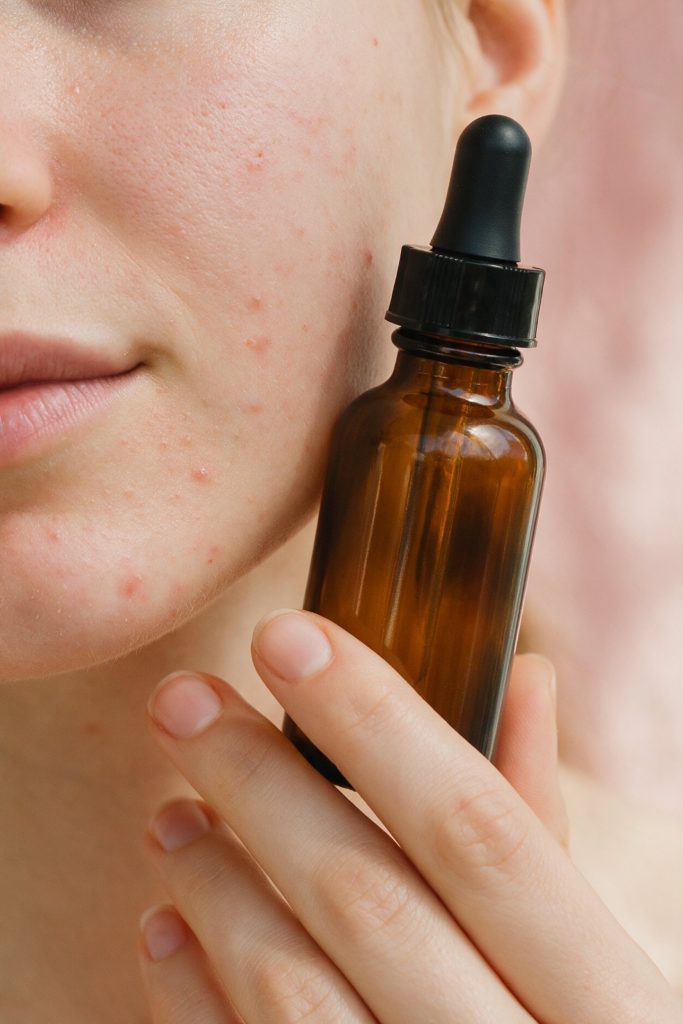
You finally started retinol, and two weeks later your skin looks worse than before. Small bumps, a few whiteheads, maybe some flaking. It’s tempting to throw the bottle out. But before you do, it’s worth working out whether you’re dealing with a retinol purge or a genuine breakout, because the right response to each is completely different.
What Is Retinol Purging?
Purging is a temporary flare of breakouts that happens when you start an ingredient that speeds up skin cell turnover. Retinoids, the vitamin A family that includes retinol, retinal, adapalene and tretinoin, push skin cells through their life cycle faster than normal.
Underneath the surface, you already have microcomedones: tiny clogs that haven’t become visible spots yet. Faster turnover brings these to the surface all at once, instead of over the coming weeks or months. So the spots you see during a purge were going to appear anyway. Retinol just speeds up the timeline, and in the long run it helps stop new clogs forming.
That’s why purging only happens with ingredients that increase turnover. Besides retinoids, that includes exfoliating acids like glycolic acid, lactic acid and salicylic acid. A new moisturiser, sunscreen or cleanser can’t cause a purge. If one of those makes you break out, it’s a reaction to the product.
Purging vs Breakout: How to Tell the Difference
There’s no lab test for this, but four clues will usually give you the answer.
1. Where are the spots?
Purging shows up in the areas where you normally get breakouts, such as your chin, forehead or around your nose. A breakout from a product that doesn’t suit you often appears in new places where you rarely get spots, such as your cheeks or jawline.
2. What do they look like?
Purging tends to be small whiteheads, blackheads and little bumps that come to a head quickly. Breakouts from irritation or clogging can include deeper, sore cysts, or clusters of tiny red bumps with itching or burning.
3. How fast do they clear?
Purging spots come and go faster than your usual acne, often within a few days. Breakout spots behave like your regular acne and linger for a week or more.
4. How long has it been going on?
This is the most useful clue. Skin takes roughly four to six weeks to renew itself, a bit longer as you get older. A purge should settle within about four to six weeks of starting the product, and definitely by eight weeks. If you’re still getting new spots after two months, or things are getting steadily worse, it isn’t purging.
What About Irritation?
There’s a third possibility people often confuse with purging: irritation, sometimes called retinization. Dryness, flaking, tightness, redness and stinging in the first few weeks of retinol are common and usually settle as your skin adjusts. That’s not a purge and not a breakout. It’s a sign to slow down.
Signs you’ve gone past normal adjustment into a problem:
- Burning that lasts after the product has absorbed
- Raw, weepy or cracked patches
- Swelling, hives or an itchy rash
Stop the product if you see any of these. Swelling or hives can be an allergic reaction, and it’s worth speaking to a pharmacist or doctor.
How to Get Through a Retinol Purge
If everything points to purging, the aim is to keep going while keeping your skin comfortable.
- Don’t quit too early. Stopping at week three means you go through the purge without getting the payoff.
- Cut back the frequency. Use retinol two or three nights a week and build up slowly. Our beginner’s guide to retinol has a week-by-week plan.
- Buffer it. Apply a thin layer of moisturiser before retinol, or mix a drop into your moisturiser, to soften the effect.
- Keep the rest of your routine simple. A gentle cleanser, a barrier-supporting moisturiser with ceramides, and daily SPF. Pause other exfoliating acids for now.
- Hands off. Picking purge spots turns a four-week problem into months of dark marks.
- Wear sunscreen every day. Retinoids make skin more sensitive to the sun, and UV makes post-acne marks darker and slower to fade.
What to Do If It’s a Breakout
If the clues point to a genuine breakout, the product probably isn’t right for your skin, or something else in your routine is the problem.
- Check what else is new. If you started retinol and a new moisturiser in the same week, you can’t tell which one is responsible. Stop the newest non-active product first.
- Look at the base formula. Some retinol creams use rich, occlusive bases that can clog pores in acne-prone skin. A lighter serum formula may suit you better.
- Try a different retinoid. Adapalene is designed specifically for acne and is often a better fit for breakout-prone skin. See our Differin adapalene gel review.
- Consider a gentler alternative. If retinoids keep causing trouble, bakuchiol or azelaic acid can target similar concerns with less irritation.
A Gentle 8-Week Plan for Starting Retinol
Most purging and irritation problems come from doing too much too soon. This schedule gives your skin time to adjust. Use a pea-sized amount for your whole face each time.
- Weeks 1 to 2: two nights a week, buffered with moisturiser underneath.
- Weeks 3 to 4: three nights a week, spaced out (for example Monday, Wednesday, Friday). Some purging may appear now.
- Weeks 5 to 6: every other night if your skin feels comfortable. Keep buffering if you notice dryness.
- Weeks 7 to 8: most nights, or stay at every other night if that’s what your skin prefers. Any purge should be settling.
If your skin becomes red, flaky or stings at any point, drop back to the previous step for a week. There’s no prize for getting to nightly use fast. Consistency over months is what delivers results.
It also helps to keep a quick photo diary. Take a picture in the same light once a week. When you’re in the middle of a purge it’s hard to judge progress from memory, and photos make it much easier to see whether things are improving or getting worse.
When to See a Dermatologist
Book an appointment if you get painful cysts, if breakouts are leaving scars, if nothing has improved after three months, or if you’re unsure what’s going on. A dermatologist can also prescribe stronger options if over-the-counter retinol isn’t enough.
Retinol Purging: FAQ
How long does retinol purging last?
Usually four to six weeks, which matches one full skin renewal cycle. For some people it’s shorter. If new spots keep appearing after eight weeks, it’s unlikely to be purging.
Does everyone purge on retinol?
No. Many people never purge at all, especially if they don’t normally get clogged pores. Starting slowly with a low strength reduces the chance.
Can a moisturiser or sunscreen cause purging?
No. Only ingredients that speed up cell turnover, such as retinoids and exfoliating acids, can cause purging. Spots after a new moisturiser or sunscreen are a breakout.
Should I stop using retinol if I’m purging?
Not if it’s a true purge. Reduce how often you use it and support your skin barrier, but keep going so you reach the clearer skin on the other side.
Can I use salicylic acid during a purge?
It’s best to pause other exfoliants while your skin adjusts. Once things settle, you can reintroduce a BHA on alternate nights. Our salicylic acid guide explains how to combine them safely.