
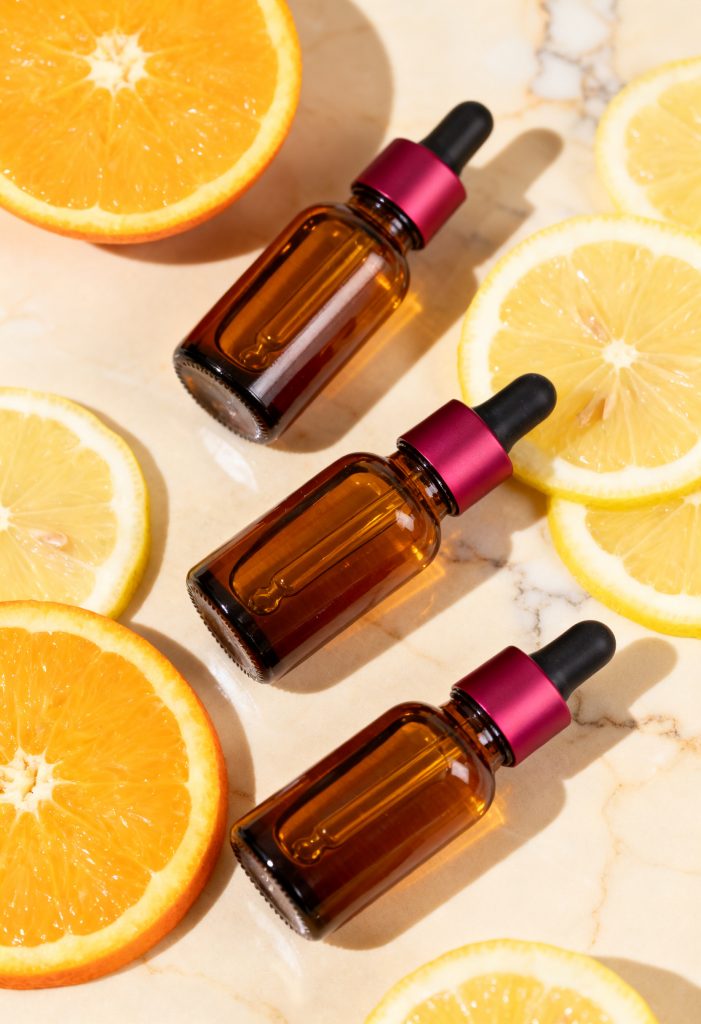
Vitamin C is one of the most popular brightening ingredients on the market, but it also comes in the widest range of forms and stability levels of any active. Here is how to match a formula to your skin type and budget, without getting lost in the marketing.
For Sensitive Skin: Look for Derivatives
If straight L-ascorbic acid has irritated your skin before, look for gentler derivatives like sodium ascorbyl phosphate or ascorbyl glucoside. They are more stable and less likely to sting, though they tend to work more gradually than pure L-ascorbic acid.
For Oily or Acne-Prone Skin: Prioritize Lightweight Textures
A water-based or serum-gel texture will absorb without adding shine or feeling heavy under sunscreen and makeup. Formulas that pair vitamin C with niacinamide can offer both brightening and oil control in one step, though some very reactive skin can find the combination irritating at first — patch test before committing.
For Maximum Potency: L-Ascorbic Acid, 10-20%
If your skin tolerates it well, pure L-ascorbic acid in the 10-20% range is the most researched and generally most effective form for visible brightening and antioxidant protection. It is also the least stable form, so proper packaging (opaque, airless pump) and storage matter more here than with any other type.
On a Budget: What to Look For
- Opaque or airless packaging — vitamin C degrades quickly in clear bottles or jars exposed to light and air, regardless of price point
- A visible concentration on the label — brands that state their percentage tend to be more transparent about formulation generally
- A recent purchase date — vitamin C has a shorter shelf life than most actives; a fresher bottle performs better than an older one at the same price
How to Tell If Yours Has Gone Bad
L-ascorbic acid oxidizes as it degrades, and the tell is visual: a serum that has turned yellow, orange, or brown has lost much of its effectiveness, even if it does not smell different. Store any vitamin C serum away from direct light and reseal it fully after each use to extend its usable life.
The Bottom Line
The “best” vitamin C serum depends far more on your skin type and how well you store it than on price. A well-formulated, well-stored mid-range serum will outperform an expensive one that has been left open on a sunny windowsill.